
Reviewed by: Dr. Robert Menardi, DVM
Have you ever noticed your dog twitching, whimpering, or moving their legs or tail while they’re curled up fast asleep? Pup parents have long been curious about what happens during their dog’s sleeping hours. Humans dream, so…do dogs? Our canine companions spend so much time sleeping— experts suggest that dogs sleep 12 hours per day on average. Surely their brains are busy dreaming for at least some of this time.
Table of contents
Do dogs dream?
Like us, dogs go through several sleep cycles while they’re snoozing. These cycles are made up of two stages: slow-wave sleep (SWS) and rapid eye movement (REM) sleep. We know that humans dream, and since the sleeping brains of dogs and people go through similar stages of activity, it is safe to assume that dogs dream, too. In fact, scientists believe that most vertebrates can and do dream on a regular basis.
How often do dogs dream?
Dogs spend about half of their day sleeping. For puppies, senior dogs, and larger breeds, time spent sleeping can be even longer. Just as people vary in how often they dream and what they dream about, researchers believe that is also true of dogs.
When it comes to how often dogs dream, size matters. Small breeds have more frequent dreams than large dogs. These small dog dreams are shorter in duration, however, lasting only a minute or two. Large dogs, on the other hand, have fewer, but longer dreams that can last as long as ten minutes.
Frequency of dreams
The frequency and length of dreams also depend on your dog’s age. During deep REM sleep, the brain processes information it gathered throughout the day. Puppies will spend more time in dream sleep than an adult dog, as they are constantly acquiring huge amounts of new information and have much to process at night.
Dream length and frequency are also related to the amount of sleep your dog needs based on their activity level. A large dog that has an active day outside may sleep more soundly and experience longer phases of REM sleep, giving him more time to dream.
Signs your dog is dreaming
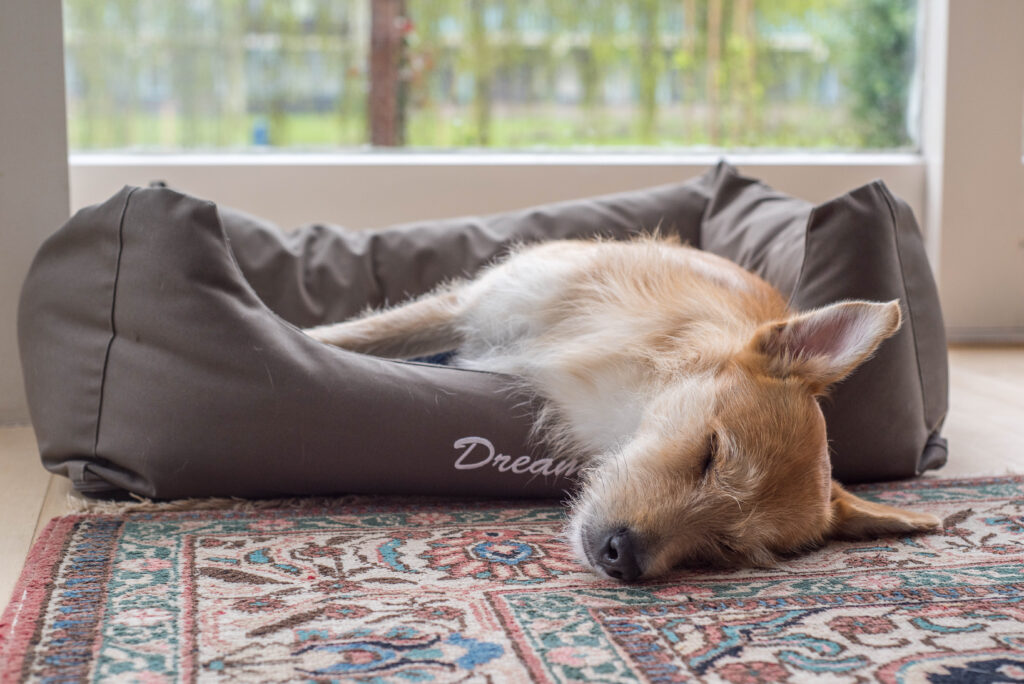
You’ve probably witnessed your pup whimpering, barking, moving their legs or tail, or engaging in some other odd behavior while they doze. These are indeed indications that your furry friend is likely dreaming. If you can see their eyes moving behind their eyelids, they’ve begun to dream.
These physical signs of a dreaming pooch have to do with their pons, a part of the brain stem that is involved in controlling sleep cycles and the regulation of deep sleep. The pons is responsible for inhibiting large muscles from moving during sleep. During REM sleep, your dog’s brain functions much like it does when awake, except their pons keeps them from physically acting out whatever is happening in dreamland. Puppies and older adult dogs twitch and move a lot in their sleep because the pons is underdeveloped in puppies and less efficient in senior dogs.
Why does my dog talk in their sleep?
If you’ve ever heard your dog let out a muffled bark, soft whine, or even a little howl while snoozing, you’re not alone. Many dogs “talk” in their sleep, and in most cases, it’s completely normal. Along with twitching paws or flickering eyelids, those nighttime noises are often a sign that your dog is deep in dreamland.
These sleepy vocalizations are harmless and don’t mean your dog is in distress. For most dogs, they’re simply outward signs of a busy brain processing memories, emotions, or imaginary adventures. It’s one of those endearing quirks that reminds us how emotionally rich our dogs’ inner worlds can be, even in sleep.
That said, it’s a good idea to pay attention to the intensity of their movements and sounds. Light twitching and soft noises are typical of REM sleep. But if your dog appears rigid, experiences prolonged, jerky movements, or doesn’t respond when called, it could signal something more serious. While rare, situations like this warrant a check-in with your vet.
What do dogs dream about?
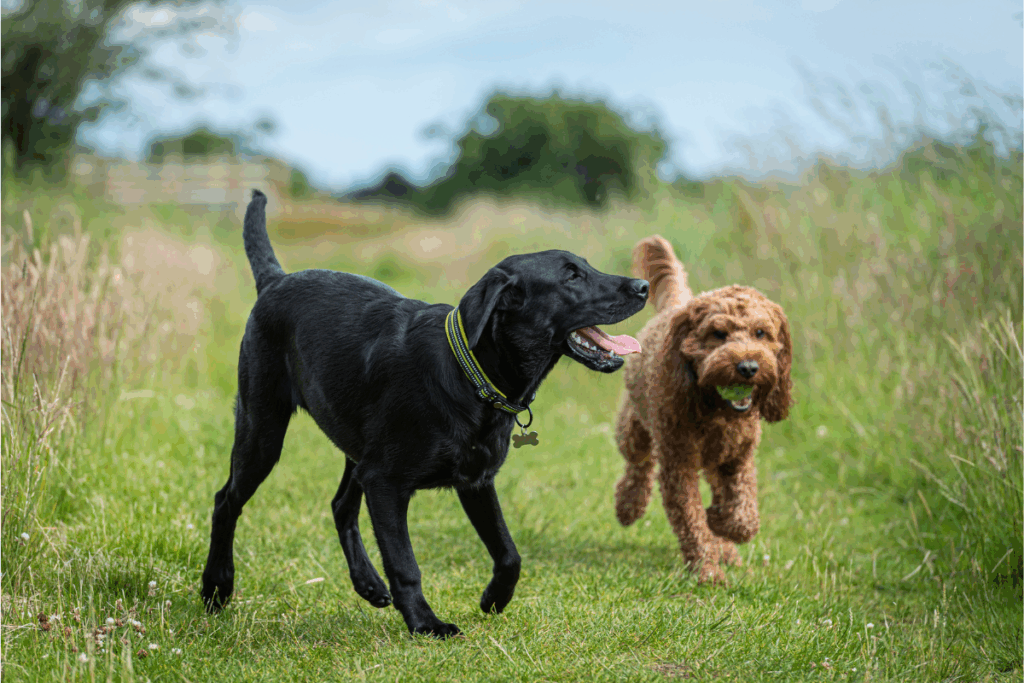
What is your dog doing in their dreams? Playing with a doggy friend? Chasing an intruder or prey? Running down their tennis ball in a big, open field? While they can’t verbally tell us, we know that animals, including dogs, tend to dream as we do.
Much like ours, doggy dreams are largely connected to and informed by what your canine companion does all day. Information and experiences gathered during the day are processed while they sleep and may be relived in their dreams. Dreams can also be influenced by your dog’s breed—Pointers may point birds; Doberman Pinschers may chase imaginary bad guys.
Curious to see if you can figure out what your pup is dreaming about in real-time? Watch your snoozing friend to see if you can detect any physical indications. REM sleep typically begins about 20 minutes into a nap and lasts for two to three minutes, during which time you might see moving eyelids or hear a muffled bark.
What science reveals about dog dreams
So, what’s really happening behind those twitching paws and soft little whimpers? While dogs can’t tell us exactly what’s in their dreams, science gives us some pretty strong clues.
Research from MIT suggests that animals experience complex dreams, and during REM sleep, their brains replay patterns from their waking hours. Since dogs share similar sleep structures with humans, it’s very likely their dreams also reflect familiar memories and experiences.
In other words, your dog’s dreams are probably filled with the stuff they know best. Chasing their favorite ball, practicing learned commands, or reliving an exciting walk through the neighborhood. Their instincts and daily routines play out again as their brain processes and reinforces those moments.
But just like us, not every dream is a happy one.
Do dogs have nightmares?
Not all human dreams are good. We can assume that dogs sometimes have nightmares, too. Just like human nightmares, while they aren’t fun, they’re harmless. It’s important to keep in mind that your dog may be a little disoriented when they first wake from a nightmare, and it can take a minute for your dog to remember where they are. Dogs can react aggressively toward the person waking them, so while we hate to watch our pups whimper in distress, it’s best to let them be. Left to their own devices, they’ll quickly settle back into reality after waking from a nightmare.
Should you wake your dog from a nightmare?
It can be tough to watch your dog whimper, cry, or twitch in their sleep. Sometimes you can’t help but wonder if they’re having a bad dream and feel the urge to wake them up. But just like with people, it’s usually best to let dogs move through their dreams naturally.
During deep REM sleep, their brain is actively processing memories and emotions from the day. Waking them abruptly can be disorienting and may trigger a startled or reactive response. Even if it looks like they’re caught in an unpleasant dream, it’s often fleeting and not a cause for concern.
If you’re worried, you can softly call their name from a little distance or make a quiet sound to gently bring them out of the dream. Avoid physically shaking or startling them awake, especially while they’re still in that groggy, half-asleep state. In most cases, they’ll settle back into restful sleep on their own within moments.
Even the more animated dreams, complete with kicks, twitches, or little barks, are just part of a healthy sleep cycle. Think of it as your dog’s brain filing away the day’s adventures while their body takes a well-earned rest.
Want to encourage sweet dreams?
Want to help your dog have calmer, more restful sleep (and maybe sweeter dreams)? A peaceful evening routine can make a big difference. Try a short, relaxed walk before bedtime, dim the lights, and create a cozy, secure spot with a comfortable bed or crate. Soft ambient noise, like a fan or gentle music, can also help block out household sounds that might disturb them. For dogs with irregular sleep patterns, such as puppies or seniors, keeping a consistent routine is especially helpful. Some pet parents also explore natural calming options, like veterinarian-trusted CBD dog chews, which may help support relaxation.
Let sleeping dogs lie
Dogs dream just like we do, processing information and playing out scenarios from their everyday lives. Considering how much our pups sleep, they might even dream more than we do. Their vocalizations and twitching body parts may show you what they’re dreaming about—see if you can figure out your pup’s dreams!
Any health or medical information in ElleVet blogs is from a variety of public and reputable sources. This information is intended as an educational resource only and is not a substitute for expert professional care.