Reviewed by: Dr. Robert Menardi, DVM
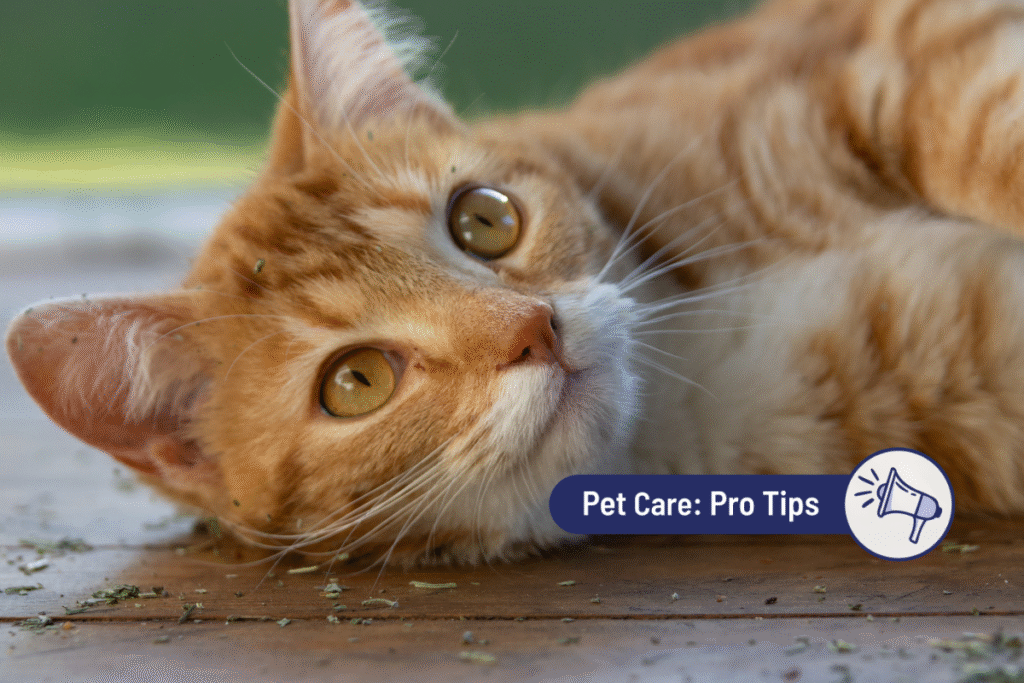
If you’ve ever seen a cat zoom around the room, meow, and roll around with catnip, you know what an entertaining and seemingly enjoyable experience it can be for our feline friends. Catnip, sometimes referred to as catmint, catwort, or field balm, is a fragrant member of the mint family that some cats can’t seem to get enough of. Originally from Europe and Asia, Nepeta cataria is known to have a euphoric effect on some felines. But is it safe? And why do some cats like it so much while others don’t?
Is catnip safe?
Catnip is considered non-addictive and non-toxic for cats. There is no evidence of negative long-term effects of the aromatic herb on these animals. However, feline parents should be mindful of too much of a good thing—while cats can’t overdose on catnip; too much can cause digestive upset. Eating an excessive amount of catnip can lead to vomiting and diarrhea.
How does it work?
The catnip response is a unique phenomenon, often described as an involuntary, yet pleasurable and rewarding response for the cat. This response is considered distinct from regular feline predatory play due to its intensity and duration, often involving stereotypic behaviors like intense rubbing and rolling. It is a potent chemical cue that taps into a cat’s intrinsic motivation for certain play-like activities, making the experience highly captivating.
Taste and smell
Cats have a powerful sense of smell, aided by their extra scent gland in the roof of their mouth that carries scents from their mouth and nose directly to their brain. It’s the strong smell that attracts most cats to catnip, not the taste, but the herb can be both sniffed and eaten. In fact, the herb also works differently in your cat’s body depending on how they are interacting with it. Sniffing tends to be associated with the wild, energetic response while eating catnip is more likely to mellow out your feline friend and help them sleep.
When you see your cat getting excited about catnip, it’s because they have picked up on the plant’s nepetalactone, a chemical compound found in catnip’s aromatic essential oil. While most cats enjoy catnip both dried and fresh, fresh is more potent than the dried form.
It’s only natural
Researchers suspect that catnip targets kitty “happy” receptors in the brain and mimics feline reproductive hormones. This results in a euphoric response from the cat in which they are reacting to an artificial feline pheromone. This response isn’t dependent on your cat’s reproductive ability; however spayed and neutered cats react to the herb the same way non-sterilized pets do.
On a neurobiological level, nepetalactone binds to olfactory receptors in the cat’s nose, triggering a sensory signal that is relayed to key brain regions, such as the amygdala and hypothalamus. The amygdala processes emotional responses, and the hypothalamus regulates behaviors related to pleasure and aggression, resulting in the characteristic euphoric state.
This entire process is also linked to the release of the neurotransmitter dopamine, which plays a crucial part in the sensation of pleasure and reinforces the enjoyable experience.
Why doesn’t my cat like catnip?
Catnip sensitivity is hereditary. About two out of three cats inherit a sensitivity to the herb. Kittens and young cats will not likely respond to catnip until they’ve reached maturity. The sensitivity to catnip develops as a cat’s sensory system and neural pathways mature, which means you won’t know if your cat has the catnip gene for the first three to six months.
It has also been observed that many senior cats show little to no effect from catnip, and some may even actively avoid it. Therefore, a lack of reaction in a very young or very old cat is a natural part of feline development and aging, and not a cause for concern.
Catnip alternatives
For the roughly 30% segment of the feline population that is genetically unresponsive to catnip, there are several safe and effective plant alternatives.
The most popular and potent of these is silvervine (Actinidia polygama), which has been shown to elicit a positive reaction in nearly 80% of cats, including many that don’t respond to catnip.
Other viable alternatives include valerian root (Valeriana officinalis) and Tatarian honeysuckle wood (Lonicera tatarica), both of which contain compounds that act as feline olfactory stimulants, offering similar stimulating or calming effects to about half of all cats.
How will catnip affect my feline friend?
Zoom around or zone out
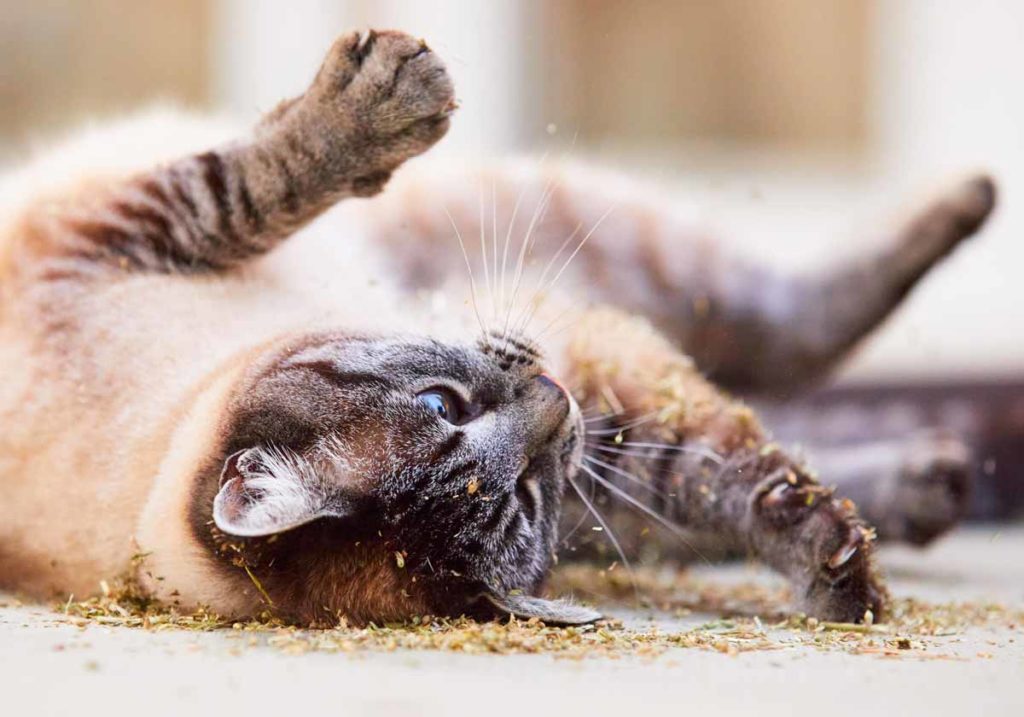
Most cats react to catnip by rolling around in or rubbing up against the plant. More active or even hyperactive reactions can be similar to the behaviors of a female feline in heat. They may jump, flip, zoom around the house, vocalize, or salivate. As previously mentioned, some cats may also or alternatively zone out and become very calm and relaxed.
Comes in waves
Reactions to catnip are temporary but vary in length depending on the cat. Short-lived yet intense bursts of hyperactivity and playfulness usually last about 10 minutes. After that initial exposure and pleasure passes, cats actually become briefly immune to the effects of the herb. It may take as long as two hours for your cat to “reset” and become susceptible to catnip again.
Using catnip at home
Enrichment
Given cats’ strong response to catnip, the herb can be a powerful enrichment tool or training aid for feline parents. Indoor cats, for example, often need a little extra stimulation to keep them mentally and physically active and satisfied. Similarly, for cats who tend to be less active, catnip toys can encourage play and exercise. Getting your feline friend mentally and physically engaged can lead to happier, healthier living.
Training
Want to keep your kitty from clawing furniture? Using catnip on scratching posts can attract your feline friend to a more appropriate place for their natural but destructive behavior. The same can be done if you just bought your fluffy friend a new bed or toy that you’d prefer they use—sprinkle or rub catnip on the new item to pique your cat’s interest. You can even “marinate” items in dried catnip!
Supporting everyday calm and comfort
Every cat has their own personality; some are natural explorers, while others prefer a cozy nap in a sunny spot. Whether your feline is full of playful energy or prefers to lounge, supporting their overall sense of calm can make a big difference in their daily well-being.
ElleVet Sciences’ CBD for cats is formulated with your feline friend’s needs in mind, and proven to promote relaxation, calm behavior, and overall comfort in cats.
Any health or medical information in ElleVet blogs is from a variety of public and reputable sources. This information is intended as an educational resource only and is not a substitute for expert professional care. Always consult your veterinarian before introducing any new supplement to your cat’s routine to ensure it’s the right fit for their individual needs.