
Reviewed by: Dr. Robert Menardi, DVM
Chances are, if you live with a dog, you’ve been nudged by a paw on your arm, across your lap, or right up against your face. Sometimes it’s gentle, almost like a soft reminder, and other times it feels more like a demand you can’t ignore. It’s a common habit for many dogs, so it’s not uncommon to wonder what’s really going on when dogs push on you with their paws.
The answer isn’t always the same. Pawing can be your dog’s way of showing affection, asking for attention, or just keeping the conversation going. Knowing the difference helps you respond in a way that strengthens your bond without reinforcing bad habits.
Why Do Dogs Paw Their Owners?
Without words to rely on, dogs often use body language, including their paws, to get a message across. Sometimes it’s as simple as, notice me, or I love you. Other times it’s more practical, like I’m hungry or I need to go out. Trainers even have a term for this called manding, which describes when a dog uses a learned behavior, like pawing, to request something specific.
Pawing is also one of the ways dogs show affection, almost like their version of petting you back. A paw on your arm during snuggle time can be as meaningful as a soft gaze or tail wag. Touch is a natural part of bonding, and many dogs use their paws to reinforce that closeness. Breed and personality also play a role. Boxers, Golden Retrievers, and Great Danes are famously “paw-forward,” while other breeds may be less likely to use this gesture.
There’s also an instinctive layer to pawing behavior. Puppies paw at their mothers for milk or nudge littermates during play, and those early gestures often carry into adulthood. Pawing can also become a learned habit. If your dog once earned a treat, toy, or even a smile by pawing, they may use it again to test what works.
At its core, pawing is a form of communication, but its meaning shifts according to context. Paying attention to timing, body language, and your own response helps you decode whether your dog is asking for affection, play, food, comfort, or simply connection.
Why Dogs May Suddenly Start Pawing
If your dog never used to paw much but suddenly begins, it’s worth paying attention to what might have changed. Sometimes the reason is situational. It could be a new baby in the house, a change in work hours, or even your own stress levels. Dogs are incredibly sensitive to subtle shifts in their environment and in us.
Pawing can also be your dog’s way of asking for comfort during nervous moments. Some dogs nudge their owners during thunderstorms, loud noises, or times when they’re feeling unsettled. If you notice pawing paired with clinginess, tucked tails, or restlessness, it may be more about reassurance than a simple request.
Often, pawing comes with context clues right before it happens. Circling near the door may point to a potty break. Staring at their food bowl might signal hunger. Spotting these pre-paw signals can help you meet the need before the paw ever lands. You can also use that moment to redirect. Give them a command before dinner, such as “sit,”, so pawing doesn’t become the only way your dog knows how to ask.
Affection vs. Attention-Seeking
Once you’ve noticed a change in your dog’s pawing, the next step is figuring out what it means. Not every paw on your leg carries the same message. Some are sweet, some are demanding, and some are just curious experiments.
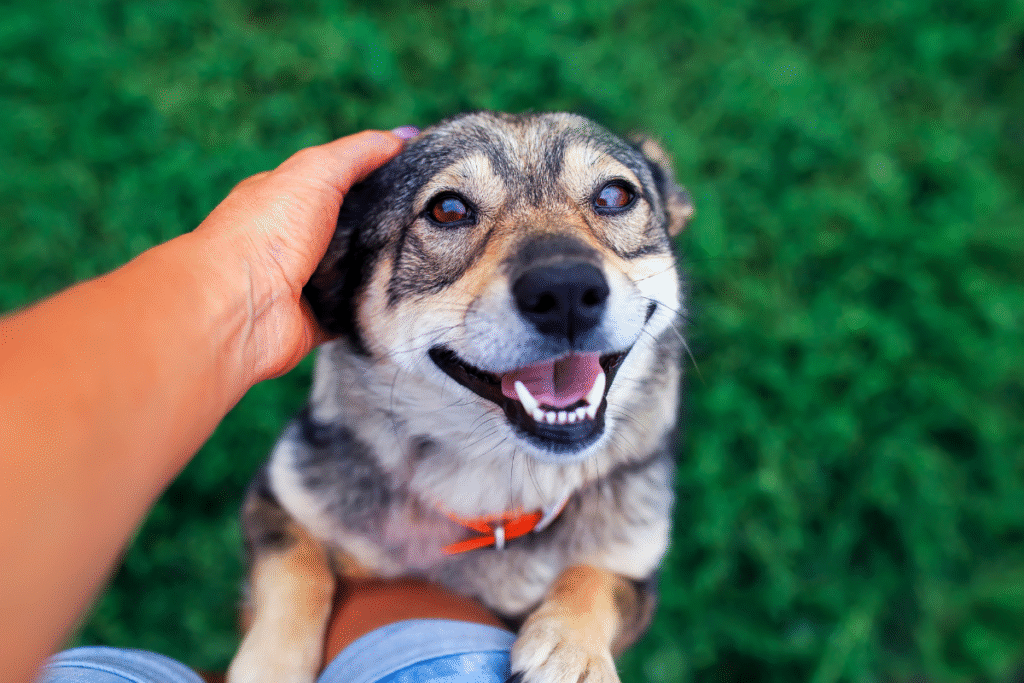
Affectionate pawing usually happens during calm moments. Your dog curls up beside you on the couch, places a paw across your arm, and sighs. The rest of their body language matches the mood: loose muscles, soft eyes, maybe even drifting off to sleep.
Attention-seeking pawing, on the other hand, tends to be more insistent. You might notice the nudges at dinner, while you’re working or on the phone, or when your dog wants to remind you it’s walk time. The body language is different, too. Ears perked, eyes alert, maybe even little vocalizations.
Context is your best guide. When the pawing is accompanied by a wagging tail and a bright, alert posture, it’s often your dog’s way of asking you for something. If your dog paws at you while resting calmly, it’s less a request and more a sign they simply enjoy being close.
When Pawing Becomes Excessive
Pawing on its own isn’t a problem, but it can turn into a habit if every nudge gets rewarded. A dog that realizes pawing always brings food, playtime, or attention may start using it nonstop.
For pet parents, repetitive pawing can be frustrating. It also limits your dog’s ability to use other, healthier ways of communicating. If you notice this pattern, instead of giving in every time, try redirecting your dog’s behavior. For example, if pawing starts at mealtime, guide them to their bed and praise them for relaxing there. This helps them relearn which behaviors will be rewarded versus those that won’t.
Consistency makes all the difference. If one person in the house gives food for pawing while another ignores it, your dog ends up confused, and the habit gets stronger. A shared approach ensures your pup knows what to expect, no matter who they’re interacting with.
The Best Ways to Respond to Pawing
Responding to pawing isn’t about shutting it down completely. Pawing is part of how dogs communicate, and it can be sweet in the right context. The goal is to guide the behavior so it works in your home without becoming disruptive. That starts with noticing when pawing is calm and gentle. A paw resting on your leg during a quiet evening can feel as meaningful as a tail wag or soft gaze, and many pet parents are happy to welcome it.
When pawing turns pushy, it’s time to redirect. One of the most effective tools is substitution. Ask for a behavior your dog already knows, such as “sit” or “down,” then reward their obedience. Over time, they learn that calm behaviors earn attention more reliably than persistent pawing. You can also provide them with different outlets to divert their attention, such as a puzzle feeder or a chew toy, if pawing starts during a busy moment. This satisfies their need for engagement without rewarding the habit.
Equally important is rewarding stillness. Many dogs paw simply because it gets noticed, while quiet behavior slips by without acknowledgment. If your dog settles calmly at your feet or relaxes on their mat, reinforce that moment with praise, a gentle scratch, or even a small snack. By consistently noticing the behaviors you want to see more of, you balance out the attention they get for pawing and encourage them to offer calmness on their own.
Another helpful strategy is teaching a “hand target” cue, where your dog touches their nose to your palm instead of pawing. This gives them a clear, structured way to seek interaction that feels less intrusive. It’s a simple behavior to teach and can be especially useful for dogs that are naturally “paw-forward.” By combining redirection, positive reinforcement, and consistent cues, you can keep pawing as a positive form of communication.
Special Considerations: Puppies vs. Adult Dogs
Puppies often paw simply because they’re still learning how their bodies work. Just like they chew, nip, and tumble awkwardly, they also use their paws to explore. Pawing at you during play or cuddle time is part of figuring out boundaries and testing what gets a reaction. With patient, consistent guidance, most puppies grow out of the constant pawing stage as they mature and learn other ways to communicate.
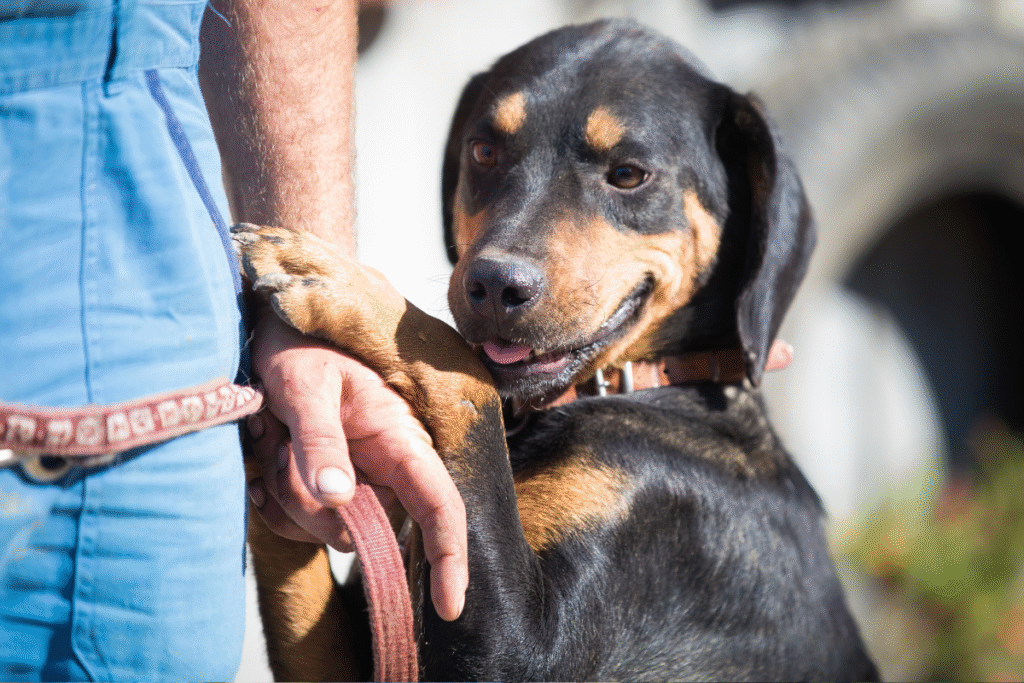
Adult dogs, on the other hand, usually paw with more purpose. By this stage, they’ve made the connection between their action and your response. A paw on your leg isn’t just a random gesture. It’s a deliberate choice to get your attention, affection, or interaction. That’s why consistency in your response matters. If you reward calm moments instead of every paw, you’ll guide your dog toward behaviors that fit more smoothly into your life.
Supporting Calm Behavior
If pawing feels constant, it may help to zoom out and look at your dog’s day as a whole. Dogs with plenty of physical exercise, mental stimulation, and steady routines are far less likely to rely on pawing as their main communication technique.
Enrichment doesn’t have to be complicated. Along with daily walks and play, short brain games like hide-and-seek with treats, teaching a new trick, or practicing cues they already know can give your dog a mental workout. Puzzle feeders, snuffle mats, and food-dispensing toys also keep their minds busy while satisfying natural foraging instincts. For many dogs, this kind of mental exercise is just as tiring and more satisfying as physical play alone.
When dogs have these outlets, pawing usually shifts from constant nudges for attention to an occasional, balanced way of connecting. Another option to consider is CBD chews for dogs, which may help promote relaxation and overall wellbeing when paired with consistent training and enrichment. Be sure to always check with your veterinarian before adding a new supplement to your dog’s routine.
Helping Your Dog Communicate
Pawing is just one piece of your dog’s communication toolkit. Sometimes it’s a sweet gesture of closeness, other times it’s a push for action. The key is recognizing the difference and responding in a way that keeps communication clear.
When you approach pawing with consistency and patience, you’re not only managing a behavior, but showing your dog that they can count on you to understand them. This builds trust, reduces frustration, and makes daily life feel smoother and more connected.
In the end, those little paws on your arm are a reminder of the bond you share. By guiding the behavior with care, you deepen that bond and create a relationship where communication flows both ways.
Any health or medical information in ElleVet blogs is from a variety of public and reputable sources. This information is intended as an educational resource only and is not a substitute for expert professional care.