Reviewed by: Dr. Robert Menardi, DVM
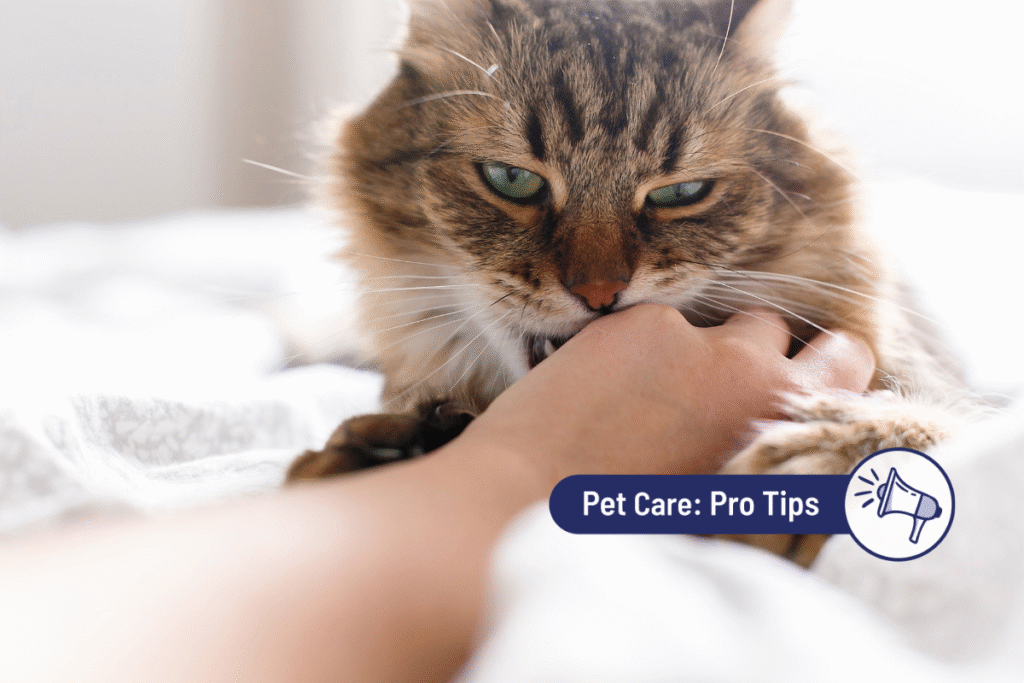
Have you ever been peacefully petting a purring cat, only to have them turn around and swat or try to bite your hand? Sudden cat aggression, considered hostile or violent behavior intended to dominate or intimidate, is a fairly common behavioral problem in cats. In fact, aggression is the second most common feline behavior problem seen by animal behaviorists, behind litter box issues.
Why is your cat suddenly being aggressive, and what can you do to address the behavior? Here’s what you need to know.
Table of contents
- Consequences of cat aggression
- Signs of aggression in cats
- Reasons for sudden cat aggression
- How to calm an aggressive cat
- What not to do with an aggressive cat
- FAQs
- Conclusion
Consequences of cat aggression
Cats are born with five potential weapons: their mouth full of sharp teeth and four clawed paws. Aggression in cats can range from hissing to a full-on attack, which can result in painful injuries to you or other pets and even lead to rehoming your cat. According to the Cornell Feline Health Center, a recent study reported that 27 percent of cats relinquished to shelters for behavioral reasons were surrendered for aggression.
Cat bites and scratches can cause severe injuries that are painful and prone to infection. They can also cause cat scratch fever, a usually benign but potentially serious infectious disease that causes flu-like symptoms. Fights between cats rarely result in fatalities, but they can lead to infections and significant veterinary expenses. Aggressive cats can pose a real danger to family members and visitors alike.
Signs of aggression in cats
Feline aggression can occur for a multitude of reasons, and it can be difficult to identify the warning signs before a cat acts out. However, aggression rarely comes about entirely without warning, and there are subtle cues cat owners can learn to recognize.
Watch out for changes in a cat’s body language, including:
- Dilated pupils
- Fast tail twitching or thrashing
- Direct stare
- Crouched or arched posture
- Ears flattened or oriented backward
- Raised hair along the spine
- Stiff posture
- Vocalization such as hissing, growling, or yowling
- Swatting
- Biting
Reasons for sudden cat aggression
Several different factors can trigger or cause aggression in cats. Being able to identify the cause behind your cat’s behavior can help you address the issue and prevent future incidents.
Some possible reasons for aggression in cats can include:
Fear and stress
If your cat feels threatened, unsafe, overstimulated, or stressed, they may become aggressive as a means of self-protection. Changes in the household or environment such as new people, loud noises, other pets, or even different smells can create stress for a cat. While cats can be fearful of new things, they may also exhibit fear or stress if they have developed a negative association based on a previous experience.
Discomfort
Cats that are experiencing discomfort may act aggressively toward people or other pets in an attempt to avoid touch, movement, or certain activities that might worsen the discomfort. Because cats are naturally stoic and don’t show discomfort or vulnerability outwardly, subtler behaviors like hiding, decreased appetite, lethargy, or aggression can signal that something is wrong. This discomfort may be caused by injury, illness like dental disease, or joint discomfort.
Play
Learning appropriate play is an important part of a cat’s socialization, and this normally occurs during time spent with littermates. Cats learn that they are biting or scratching too hard when their littermates stop playing or retaliate. Cats raised alone during their early lives may not learn this important lesson, so their play style can be interpreted as aggressive.
Territorial behavior
Cats are creatures of habit and routine. Some cats may become protective of their territory if changes occur in their environment or if they feel threatened in their “safe space.” This can happen with visitors, new people, or animals in the house or neighborhood. This aggression commonly takes the form of swatting, chasing, and attacking the intruder
Inter-Cat Aggression
Similar to territorial behavior, cats may occasionally show aggression toward people or other pets to establish social dominance. This is most common between male cats as they approach social maturity between two and four years of age, and sexual hormones play an important role in these interactions.
Redirected Aggression
When a cat is startled or upset by a stimulus but cannot respond to it directly, they may redirect their reaction toward a human or another cat. In this case, it may not have been anything you did at all—perhaps there is a squirrel in the front yard, or a dog walking by with their owner. Redirected aggression can be the most challenging and dangerous behavior to prevent, as it can seem unprovoked.
Petting-Induced Aggression
For reasons still poorly understood, some cats may become suddenly aggressive while being pet. It’s possible that the repetitive motion over time turns from pleasant to irritating. Other potential explanations include overstimulation and an attempt by the cat to control when the petting ends. Handling, bathing, grooming, and nail trimming can also cause this type of aggression.
How to calm an aggressive cat
Early intervention is key when addressing sudden cat aggression. Identifying your cat’s specific triggers is essential to managing the behavior effectively. Consider consulting your veterinarian, as they will be able to rule out any health issues that may be causing your feline friend physical discomfort.
Here are additional tips for safely and effectively addressing your cat’s aggressive behavior:
- Start by speaking with your veterinarian to rule out or address any possible health issues that may be causing your cat discomfort or stress.
- Separate cats that act aggressively toward each other and have cats neutered and spayed to reduce hormone-related aggressive behavior.
- Give your cat space to let them calm down in a private, quiet, and secure place without injuring anyone or causing any destruction.
- Redirect their attention with a toy. Any objects used to distract a cat should be kept at a distance from your hands so they cannot bite or scratch you.
- Increase mental and physical stimulation by playing with your cat. Sometimes, bored cats can become overstimulated as they attempt to entertain themselves. Keeping them entertained through play can prevent sudden aggression, reduce stress, and enhance your bond.
- Remove triggering stimuli. For example, close the window blinds to prevent your cat from seeing outside, or prohibit them from going under the bed.
- Gradually desensitize your cat to triggering events, objects, or experiences, and use positive reinforcement if they cannot be avoided entirely. Briefly expose your cat to the stimulus from a distance, and then reward non-aggressive behavior with food and praise. This includes slow, gradual introductions or reintroductions with other cats.
- Consult a pet behaviorist. A behaviorist who specializes in cats can help you identify what’s triggering your cat’s aggression and give you tips to help your feline friend cope.
What not to do with an aggressive cat
Just as important as understanding what to do when your cat suddenly becomes aggressive is knowing what not to do. Aggression can worsen when inadvertently encouraged or mishandled. Here are some things to avoid when your cat gets aggressive:
- Avoid unnecessary handling, touching, and grooming if your cat exhibits aggressive behavior due to discomfort or petting. This is particularly challenging with children, who may want to handle the cat but miss important cues about how the cat will react.
- Do not react to your cat’s aggressive behavior. Punishment can increase a cat’s fear and stress, while consoling them may communicate approval of their behavior. It is also important not to retreat or show fear, as this may reinforce the behavior if your retreat is what the cat wants. Ignoring your cat when they exhibit aggression is best.
- Don’t rush introductions or reintroductions between cats and other pets or humans. Your cat is more likely to respond positively to new acquaintances if the process is gradual and comfortable for them.
- Never intervene physically in a cat fight. Getting between fighting cats puts you at serious risk of injury.
FAQs
Why is my cat suddenly aggressive toward me for no reason?
Most cat aggression has an underlying cause, even when it seems random. Common triggers include stress, fear, overstimulation from petting, redirected aggression from an external stimulus, or underlying physical discomfort. Reviewing recent changes in your cat’s environment is a good starting point.
Why does my cat bite me when I pet them?
This is known as petting-induced aggression. The exact cause isn’t fully understood, but it’s thought that prolonged repetitive contact becomes irritating over time, or that the cat is asserting control over the interaction. Watch for pre-bite warning signs like tail twitching or skin rippling, and stop petting when those cues appear.
Can aggression in cats be treated?
In many cases, yes. Identifying and addressing the root cause — whether that’s an environmental stressor, a health issue, or a behavioral pattern — can significantly reduce or resolve aggression. A veterinarian and/or certified cat behaviorist can help develop a tailored approach
Conclusion
Cat aggression often isn’t random or sudden, even if it feels that way to us. Cats typically display cues they’re upset about something before they bite or swat, so it is important for owners and those who spend time around felines to be able to identify warning signs. Identifying the root cause of your cat’s aggression, whether it’s stress, discomfort, territory, or something else, is the essential first step toward making life safer and more comfortable for everyone in the household.
Any health or medical information in ElleVet blogs is from a variety of public and reputable sources. This information is intended as an educational resource only and is not a substitute for expert professional care.
Sources:
Feline Behavior Problems: Aggression | Cornell Feline Health Center
Cat Behavior Problems: Petting Aggression | VCA Animal Hospitals