Reviewed by: Dr. Robert Menardi, DVM
Dogs experience arousal and stress just like we do. Some restlessness is a normal response to change —loud sounds, new places, separation, or routine shifts. Problems tend to show up when arousal stays high for too long or pops up in bigger, harder-to-manage spikes.
Your job isn’t to “switch off” emotion; it’s to help your dog feel safe, meet daily needs, and bring arousal back down. The ideas below are simple, natural supports you can pair with training. If distress is frequent or severe, loop in your veterinarian or a certified trainer.
Table of contents
Compression Wraps (a.k.a. Thundershirts)
A well-fitted compression wrap applies gentle, even pressure that some dogs find settling (similar to swaddling). Use it for known triggers like thunder storms or travel. When possible, apply before the triggering event starts for best results. And be sure to monitor their body language. A relaxed face and loose posture are green lights; panting or fussing means they may need a break.
You can find thundershirts and different compression support at pet stores. However, you can also improvise with a snug t-shirt for short periods, so long as you avoid anything that restricts their breathing, mobility, or traps heat.
Do they actually work?
Compression wraps won’t solve everything, and there is no guarantee that they will work all the time, but they can be a helpful layer alongside training and other natural solutions. Some pet parents swear by them, while others have found them unhelpful. The effectiveness might depend on when or how it is used. The individual personality and needs of each dog should also be considered.
Music
Humans aren’t the only ones soothed by the tranquility of music. Recent studies have shown that playing relaxing music for dogs in stressful environments is effective in decreasing signs of unease in dogs.
However, only specific music genres have proven to have a calming influence on dogs in stressful environments. A study by the Universities Federation for Animal Welfare found that dogs seem to relax when exposed to classical music. Soft rock and reggae music may also be effective, but each dog has their own preference.
There are plenty of classical music playlists that you can find easily on Spotify or Pandora. Some of these compilations are even designed to help desensitize a dog who has noise phobias.
Make sure that your dog does indeed appreciate the music by watching their body language—softer eyes and easy breathing suggest it’s helping. Use music in situations where you want them to rest (settling after a walk, car rides), but don’t rely on it alone if your dog is showing signs of significant distress.
Regular Exercise
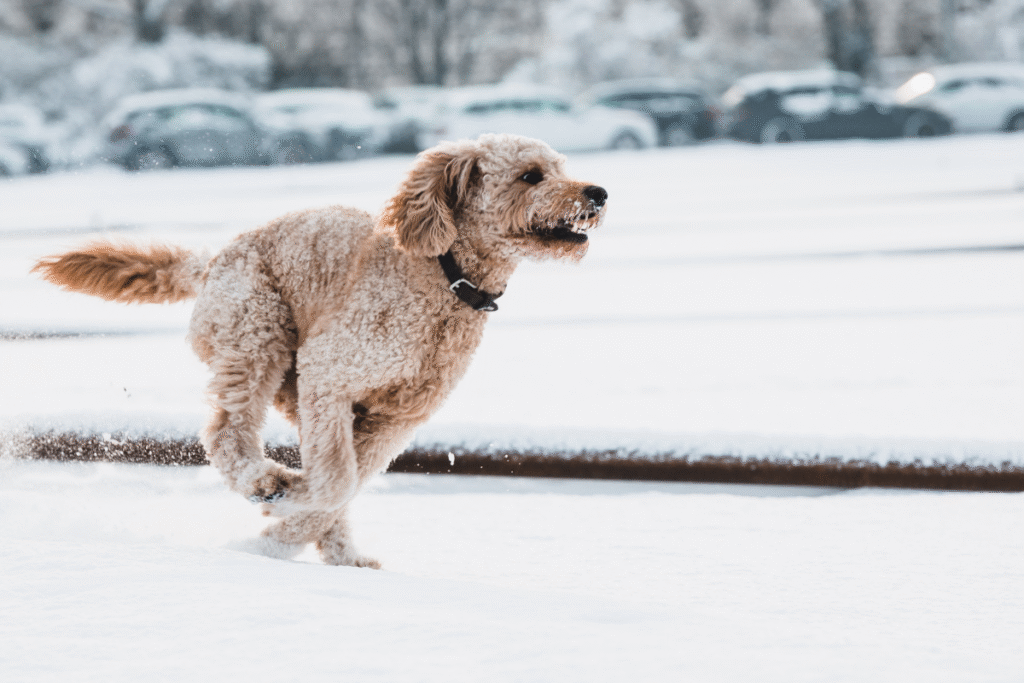
While all dogs need exercise, some breeds need it more than others. Exercise helps release pent-up energy and tension that can exacerbate their stress levels.
While all dogs need exercise, some breeds need it more than others. Exercise helps release pent-up energy and tension that can exacerbate their stress levels.
Movement changes state. Running and other activities can burn off all that extra doggy energy. Daily walks that allow sniffing (not just distance) plus short, structured play help their body downshift. Aim for a routine you and your dog can repeat—consistent time of day, similar route variety, and a predictable end-of-walk settle (mat, chew, or nap).
Exercise also stimulates the production of chemicals like endorphins and serotonin, which are the same chemicals stimulated in humans when we are physically active. At the same time, increasing activity means more time outside, which could improve their independence and socialization as well as help them become more confident and less nervous.
For puppies and seniors, go for shorter, more frequent sessions with a solid footing. If your dog shows stiffness or reluctance, check with your vet.
Mental Stimulation
While many dogs enjoy nothing more than lazing around all day, others have been raised to work. Boredom can lead to your pets developing stress behaviors.
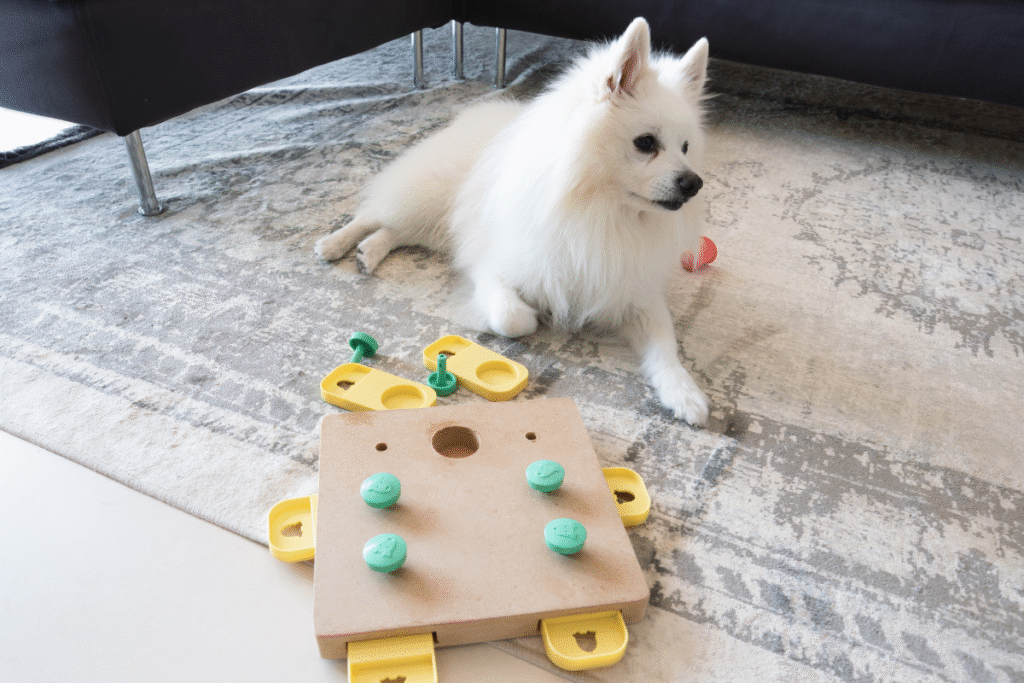
Give their brain a job. Sniff-and-forage activities, puzzle feeders, lick mats, and brief training sessions can redirect energy into focus. Keep tasks achievable and end on a win. Ten minutes engaged in problem-solving can often help to calm better than an hour of overstimulating play.
Take some time to teach your dogs some new tricks and skills. Training your dog is an opportunity to engage with your pet one-on-one, which is something dogs often crave from their owners, especially after a long day of isolation at home. Working together on something challenging can help divert their attention while strengthening their trust in you.
Supplements & Calming Aids
Some pet parents explore calming aids such as pheromone diffusers or supplements. Suitability of different aids will vary by dog and situation. CBD can be excellent for situational stress and it works fairly quickly. In situations that can cause dogs stress, such as an impending storm or car rides, giving them CBD oil or calming dog chews beforehand can help support relaxation.
The combination of science and compassion inspired ElleVet Sciences to develop effective hemp CBD products for pets, supporting dogs, cats, and horses to live their best lives.
If you’re considering options like CBD oil or chews for dogs, talk to your veterinarian. They can help you determine what’s appropriate and how to use it effectively as part of an overall plan.
Any health or medical information in ElleVet blogs is from a variety of public and reputable sources. This information is intended as an educational resource only and is not a substitute for expert professional care.