Reviewed by: Dr. Robert Menardi, DVM
If you have a new puppy, chances are you’re ready to start puppy-proofing your house and potty training them. To avoid having to clean up accident after accident, training your dog to go potty outside is essential.
That said, it takes some research and planning to successfully potty train a puppy, and at ElleVet Sciences, we believe that it’s vital to have all the information you need to train your dog before you bring them home.
This guide will break down what the process entails so you can better understand what your dog needs, the tools that will help you succeed, and some tips to keep in mind as you put your potty-training plan into action.
How Often Does a Puppy Need to Go Potty?
One of the most important aspects of a good house training plan for your puppy is creating a training schedule for their potty breaks. Young puppies need frequent trips outside because they haven’t yet learned how to control their bladder, just like human babies.
Begin by taking your puppy out once every 30 minutes or so using a leash. This will help them learn how to walk using one and can keep them from getting distracted. You should begin by taking your puppy out once every 30 minutes or so. Usually, it’s a good idea to take your puppy out on a leash. This will help teach them how to walk on a leash and will keep them from getting distracted during the potty break.
Generally speaking, you’ll need to take your puppy outside to go potty first thing in the morning, right before they go to bed, after playtime, after spending time in the crate, after napping, and after eating or drinking (which is part of why having a consistent feeding schedule for your puppy is so important, too), and right before they go to bed. A good rule of thumb is to take your puppy outside every time there is a transition between activities.
Should You Use a Crate to Potty Train Your Puppy?
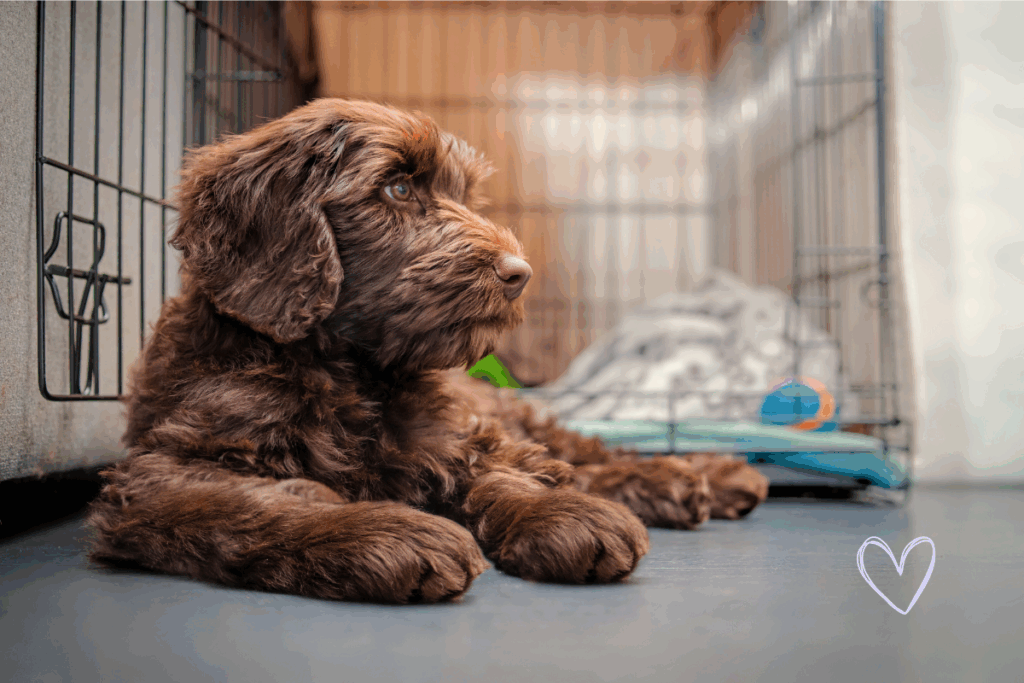
Crate training is a valuable training tool to help with the potty training process and will make life a little easier during this eventful phase of your dog’s life. The main idea behind using a crate to help potty train is that dogs, like humans, don’t like to live in messy spaces.
To help with the potty training process and make life a little bit easier during this eventful phase of your dog’s life. A dog crate or kennel is a small, enclosed space that will be a safe space for your puppy. In the same way you don’t want your living room filled with pee stains, neither does your dog. If you put them in a crate, they will learn to whine, scratch, or cry when they need to go out to avoid dirtying their space.
Some new dog owners, however, are reluctant to use a crate because it may seem like a punishment, but this isn’t the case. A dog’s natural instinct is to seek out a den-like space regardless of whether you offer them one. The small, enclosed space of a kennel or crate helps them feel safe.
The most important thing to keep in mind if you want to try crate training your dog is getting the right size crate. The crate should be big enough to allow your dog to stand up, lie down, and turn around comfortably. If the crate is too big for your puppy, they will choose a specific corner to do their business, defeating the purpose of the crate.
Should You Use a Puppy Pad or Pee Pad to Potty Train Your Puppy?
The general rule of thumb with pee pads is to only use them if you absolutely need them. Placing puppy pads around your home will provide your dog with a specific place to pee and poop inside. However, this can be confusing for your dog if you’re also trying to teach them that potty time is something that should only happen outdoors.
Yet for some pet parents, puppy pads may be necessary. If you work long hours and can’t get home throughout the day to take your dog out or live in a climate that would make going potty outside at certain times of year difficult, you may need to use potty pads to avoid coming home to rugs and floors covered in puppy pee.
Where Should You Bring Your Dog to Go Potty and How Often?
You now know all about how often your puppy will need to go potty and the signs they’ll make when they need to go, which means it’s time to discuss how to make a potty training plan.
As previously mentioned, you’ll need to start with taking your puppy out nearly every 30 minutes. From there, you’ll want to get them on a regular potty schedule that works for both of you.
When it’s time to take your dog out to go potty, set a timer for roughly five minutes so they can get used to short, efficient potty breaks. Make sure to stand in the one potty spot that you want your puppy to associate with going pee or poop (maybe it’s a specific corner of the yard or under a tree outside your apartment complex).
Standing still in the potty area will limit the amount of space your puppy has to explore and help them get tired of sniffing and be ready to move on to going potty faster. During this time, it’s important to keep quiet and not try not to interact with your pup too much. This will keep their attention on the task at hand.
If your puppy doesn’t go potty, don’t worry. Take them back inside and try again in another 30 minutes or so. If they do go potty, wait until they are completely finished, then reward them with a treat and lots of praise. This type of positive reinforcement is a powerful way to help your puppy learn the appropriate time and place to do their business and is much more effective than scolding them if they do go inside.
Once your puppy starts to get comfortable with the schedule and potty spot, you can start increasing the amount of time between trips outside for potty breaks. A good rule of thumb to keep in mind: puppies can normally control their bladder for the number of hours that corresponds to their months of age up to the number nine.
For example, a five-month-old puppy can probably hold their bladder for up to five hours. That said, all puppies are different, so you’ll need to see what your specific dog’s needs are and create a schedule that works best for you both.
What Are Some Puppy Potty Training Tips?
Once you start to implement a potty training schedule with your puppy, you may run into some obstacles and roadblocks. The following training tips can help make this process easier and less stressful for both you and your puppy.
Don’t be afraid to ask for help. If you find that, for whatever reason, potty training just does not seem to work for your puppy, contact a dog trainer for help. They will get to know your puppy, listen to your experience, and offer expert tips and guidance.
Keep a schedule. Although it may feel a little bit strange at first, keep track of when your puppy goes potty throughout the day. This will help you get a feel for how long they can control their bladder and how soon after meals they need to go out. Use their normal transition periods as a guide for when to take them out.
Always use positive reinforcement. Positive reinforcement is far more effective than negative reinforcement when it comes to training your dog. It can be frustrating when they have accidents inside, but remember that it’s out of their control, and punishing them for accidents will only encourage them to pee and poop in places you can’t see.
Clean up well. When your puppy inevitably does have an accident, make sure to really scrub the area well where it occurred. If you don’t clean up thoroughly after the accident, the smell will attract your puppy in the future, and they may start to see that place as the right spot.
Know their triggers. If your puppy tends to pee when they are excited or stressed, try to anticipate their accidents by taking them out before a trigger happens.
Can You Potty Train Older Puppies and Adult Dogs?
Although it is often said, “you can’t teach an older dog new tricks,” you can potty train an adult dog. However, keep in mind that an older puppy or fully mature dog will have to first unlearn their prior potty training habits before learning a new routine for going potty. This means that it will take slightly longer to potty train an older dog than a puppy.
Wrapping Up
You now officially know everything you need to know about how to potty train a puppy. Remember, especially at the beginning, you’ll likely have to take your puppy outside every 30 minutes or so. Once you get them on a consistent feeding and walk schedule, you can start to track their potty habits and increase the amount of time between potty breaks.
A crate can help make the process of potty training easier by providing your dog with a space they want to keep clean, encouraging them to let you know when they need to go outside. In certain cases, using puppy pads can be necessary, but try to keep their use to a minimum to avoid confusion.
Remember, it’s never too late to potty train your dog. It may take a little more time if your dog is older, but it will be well worth the effort to make home life better for you and them at home.
Sources:
Any health or medical information in ElleVet blogs is from a variety of public and reputable sources. This information is intended as an educational resource only and is not a substitute for expert professional care.