Reviewed by: Dr. David Tittle, BVetMed, CertVA, GPCert(WVA&CPM), MRCVS
Lymph nodes, part of the lymphatic system, play an important role in both humans’ and dogs’ immune systems. They help filter and trap harmful substances before they can cause more serious problems in the body.
While most lymph nodes stay small and unnoticed, swelling (or lymphadenopathy) can signal everything from a routine immune response to a serious medical condition.
It is important for pet parents to understand the importance of healthy lymph nodes and be able to identify swollen lymph nodes in their dog, which can signal an underlying health issue.
Table of contents
- What are lymph nodes?
- How do lymph nodes work in dogs?
- Importance of a healthy lymphatic system
- Where can lymph nodes be felt in dogs?
- Signs of swollen lymph nodes in dogs
- Possible causes of lymphadenopathy
- Diagnosis
- Treatment options for swollen lymph nodes
- How can you prevent lymphadenopathy?
- Bottom line
What are lymph nodes?
Lymph nodes are small, bean-shaped organs that are part of the lymphatic system, a network of vessels and organs that help remove waste and excess fluids from the body, as well as fight infection and disease. Lymph nodes contain immune cells that can help recognize and fight off foreign invaders like bacteria, viruses, and cancer cells. They are located throughout the body, including the neck, armpit, groin, and abdomen.
Inside each lymph node are immune cells, called lymphocytes and macrophages, that identify, capture, and break down bacteria, viruses, abnormal cells, and other foreign materials.
How do lymph nodes work in dogs?
The lymphatic system works by collecting and transporting lymph, a clear fluid that contains white blood cells, from various parts of the body to the lymph nodes. The lymph nodes act as filters, trapping and destroying bacteria, viruses, and other harmful substances before they can spread to other parts of the body.
After filtering the lymph, the lymphocytes and macrophages release antibodies and other immune system molecules that help fight off infection and disease. A healthy lymphatic system is crucial for protecting your dog from illness and harmful substances, making it essential for their overall health and wellbeing.
Importance of a healthy lymphatic system
When lymph nodes function properly, they quietly manage immune responses behind the scenes. But swollen lymph nodes, or lymphadenopathy, can indicate infection, inflammation, or cancer. Lymphadenopathy can occur in one or multiple lymph nodes and may cause discomfort, pain, and other symptoms.
Where can lymph nodes be felt in dogs?
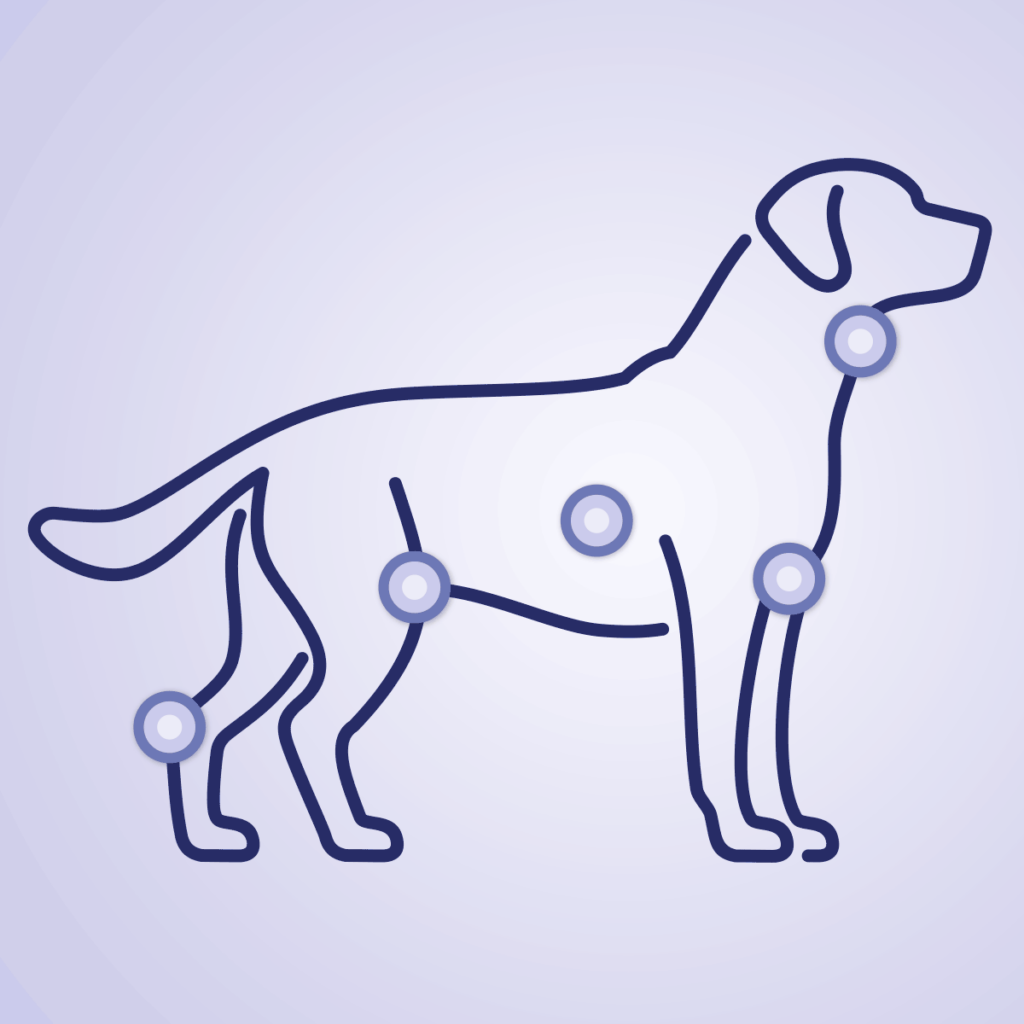
Lymph nodes are found in several areas of a dog’s body. In general, lymph nodes are located in groups, and they can be felt as small, round, or bean-shaped structures under the skin.
Some lymph nodes are internal and can’t be felt from the outside, while others are close to the surface and may be palpable under normal or mildly enlarged conditions.
Peripheral lymph nodes you may feel in a healthy dog:
- Mandibular (under the jaw): Most commonly palpable and can be felt on either side of the windpipe, just below the jawline.
- Prescapular (front of shoulders): Sometimes palpable, varies by dog
- Popliteal (behind the knee): Typically palpable, pea-sized, and can be felt on the back of the hind legs.
Nodes that are typically not palpable unless enlarged:
- Axillary (armpits): Lymph nodes in the armpits can be felt near the front legs, close to the body’s trunk.
- Inguinal (groin): Lymph nodes in the groin can be felt on either side of the genital area.
It’s essential to note that lymph nodes in dogs vary in size, and not all lymph nodes can be felt easily. Consult your veterinarian to identify and examine any enlarged lymph nodes to determine the underlying cause and necessary treatment.
Localized vs. Generalized Lymphadenopathy
Understanding whether swelling affects a single area or multiple areas helps narrow down potential causes.
Localized lymphadenopathy
- One group of nodes is enlarged
- Often linked to a nearby infection, wound, dental disease, or inflammation
Generalized lymphadenopathy
- Multiple lymph node groups are enlarged
- More commonly associated with systemic infections, immune-mediated diseases, or cancers such as lymphoma
This distinction is a key part of the diagnostic process and greatly improves accuracy.
Signs of swollen lymph nodes in dogs
Because lymphadenopathy in dogs can be an indication of an underlying health issue, it’s essential for pet owners to know the signs and symptoms of swollen lymph nodes to identify the problem early and seek veterinary care promptly. Some of the signs of swollen lymph nodes in dogs include:
- Enlarged lymph nodes that can be felt or seen under the skin
- Discomfort when touched
- Change in the shape or texture of the lymph nodes and surrounding area
- Fever
- Loss of appetite and weight loss
- Lethargy
- Coughing, sneezing, or difficulty breathing
If your dog shows any of these symptoms, it’s essential to seek veterinary care right away. Early diagnosis and treatment can improve the prognosis for dogs with swollen lymph nodes and prevent further health complications.
Possible causes of lymphadenopathy
Swollen lymph nodes in dogs can be caused by several underlying health issues, ranging from mild to serious, including:
Allergies
Allergic reactions, including food, environmental, and flea allergies, can cause regional lymph node activity in dogs.
Infections
Bacterial, viral, and fungal infections can cause swollen lymph nodes in dogs. Infections such as Lyme disease, ehrlichiosis, and parvovirus can cause lymphadenopathy.
Immune-mediated diseases
Autoimmune diseases such as lupus, immune-mediated hemolytic anemia (IMHA), and polyarthritis can cause lymphadenopathy.
Cancer
Cancerous tumors can cause lymphadenopathy in dogs. Lymphoma, a cancer of the lymphatic system, is a common cause of swollen lymph nodes in dogs.
Dental disease
Advanced dental disease, such as periodontal disease, can cause bacteria to enter the bloodstream, leading to swollen lymph nodes.
Trauma or wounds
Trauma, such as a bite wound or injury, can cause lymphadenopathy in the affected area.
Medications
Certain medications, including antibiotics and anticonvulsants, can trigger reactive lymph node enlargement in dogs.
Breed predispositions
Breeds like Boxers, Golden Retrievers, and Labrador Retrievers may have a higher risk of lymphoma, so any lymph node changes warrant prompt evaluation.
Diagnosis
Early detection and treatment can prevent further health complications and improve the dog’s overall health and well-being, so it is essential for pet parents to seek veterinary care for their dog if they suspect their furry friend is experiencing swollen lymph nodes. When a dog is experiencing swollen lymph nodes, the veterinarian will perform a series of diagnostic tests to determine the underlying cause of the issue.
Physical Exam & Bloodwork
Typically, one of the first steps is a thorough physical examination of the affected area to assess the size, shape, and texture of the lymph nodes. The veterinarian may also perform blood tests, including a complete blood count (CBC) and a biochemical profile, to evaluate the overall health of the dog and rule out any other underlying health issues.
Diagnostic Imaging & Cytology
Diagnostic imaging, such as X-rays or ultrasounds, may also be used to assess the size and shape of the lymph nodes and identify any abnormalities in the surrounding tissues.
If cancer is suspected, your veterinarian may also recommend additional tests, such as a CT scan and an MRI, to determine the type and extent of cancer present. In these cases, a cytology examination performed with a fine needle aspirate (FNA) or a biopsy of the lymph nodes may be recommended to collect a sample of cells for further evaluation under a microscope.
Identifying the underlying cause of the swollen lymph nodes is crucial in developing an effective treatment plan to manage the condition and improve the dog’s prognosis.
Treatment options for swollen lymph nodes
Treatment of your dog’s swollen lymph nodes depends on the underlying cause of the condition. In some cases, the swollen lymph nodes may resolve on their own once the underlying issue is addressed. However, in other cases, more aggressive treatment may be necessary. Some of the possible treatment options for swollen lymph nodes in dogs include:
For Infections
If a bacterial infection is the underlying cause of swollen lymph nodes, antibiotics may be prescribed to treat the infection and reduce lymph node swelling.
Inflammation or Allergic Conditions
Anti-inflammatory medications, such as nonsteroidal anti-inflammatory drugs (NSAIDs), may be prescribed to reduce inflammation and swelling in the lymph nodes.
Immune-Mediated Diseases
If the swollen lymph nodes are caused by an autoimmune disease, immunosuppressive drugs may be prescribed to suppress the immune system and reduce lymph node swelling.
Cancer
If the swollen lymph nodes are caused by cancer, chemotherapy may be recommended to shrink the tumor and reduce lymph node swelling. In some cases, surgical removal of the affected lymph nodes may be necessary, especially if cancer is present.
Supportive Care
In addition to medical treatment, supportive care such as rest, a balanced diet, and adequate hydration may be recommended to promote overall health and well-being.
Fortunately, with proper treatment and care, most dogs with swollen lymph nodes can recover and resume their normal activities.
Can you prevent lymphadenopathy?
While not all cases of swollen lymph nodes can be prevented, there are several steps dog owners can take to reduce the risk of their dogs developing this condition, including:
- Keep up with vaccinations – Vaccinating your dog against infectious diseases can help reduce the risk of developing infections that can cause swollen lymph nodes.
- Regular veterinary check-ups – Scheduling regular check-ups with your veterinarian can help detect underlying health issues early and treat them before they progress.
- Good dental hygiene – Maintaining good dental hygiene can prevent bacteria from entering the bloodstream and causing infections that lead to swollen lymph nodes.
- Regular exercise and a balanced diet – Keeping your dog physically active and providing a balanced diet can help boost their immune system and overall health.
- Flea and tick prevention – Regularly using flea and tick prevention products can help prevent allergies and infections that can cause swollen lymph nodes.
- Limit exposure to toxins – Limiting your dog’s exposure to toxins, such as cleaning products, pesticides, and other chemicals, can reduce the risk of developing cancer and other health issues that can cause swollen lymph nodes.
- Addressing skin issues or injuries – Treating minor wounds, insect bites, or skin irritations promptly can help prevent localized infections that may cause nearby lymph nodes to react or swell. Even small cuts or abrasions can become infected if left untreated, so cleaning the area and seeking veterinary guidance when needed helps reduce unnecessary immune activation.
When Swollen Lymph Nodes Are an Emergency
Seek urgent veterinary care if your dog has:
- Trouble breathing or swallowing
- Rapidly growing nodes
- Nodes so large that they interfere with movement
- Severe lethargy or collapse
- High fever
- Vomiting, diarrhea, or dehydration
These symptoms can indicate systemic illness that needs immediate attention.
Bottom line
Lymph nodes are a vital part of your dog’s immune defense. While mild swelling can be part of a normal immune response, persistent or generalized lymphadenopathy can signal infection, inflammation, or more serious disease—especially when paired with other symptoms. Quick veterinary evaluation and appropriate diagnostics are the best way to identify the cause and begin effective treatment.
With attentive care and regular wellness checks, most dogs with swollen lymph nodes can be diagnosed early, treated appropriately, and supported back to better health.
Any health or medical information in ElleVet blogs is from a variety of public and reputable sources. This information is intended as an educational resource only and is not a substitute for expert professional care.