Reviewed by: Dr. David Tittle, BVetMed, CertVA, GPCert (WVA&CPM), MRCVS
Ever stood at the top of a steep staircase and hesitated for just a moment? The same can happen to dogs. And it’s not just puppies seeing stairs for the first time. Even a dog who once bounded up and down without a second thought can lose confidence. Sometimes stairs are just unfamiliar, other times the steep angle, noises, or lack of traction make them feel risky. Discomfort as a result of previous experiences, or due to an aging body, can cause your pooch to be apprehensive when faced with stairs that they may have used regularly for years.
Before you jump into helping your dog feel more comfortable, take some time to watch how they react to the stairs. Are they hesitant only going up, going down, or both? Do they freeze, whine, or avoid the steps entirely? These details can offer clues about the cause and help you choose the best way to build their confidence.
Understanding Why Your Dog Is Afraid of Stairs
The reasons behind a dog’s fear of stairs are as individual as the dogs themselves. For some, it’s simply a lack of exposure. A puppy raised in a single-story home might see stairs for the first time and freeze, unsure how to move.
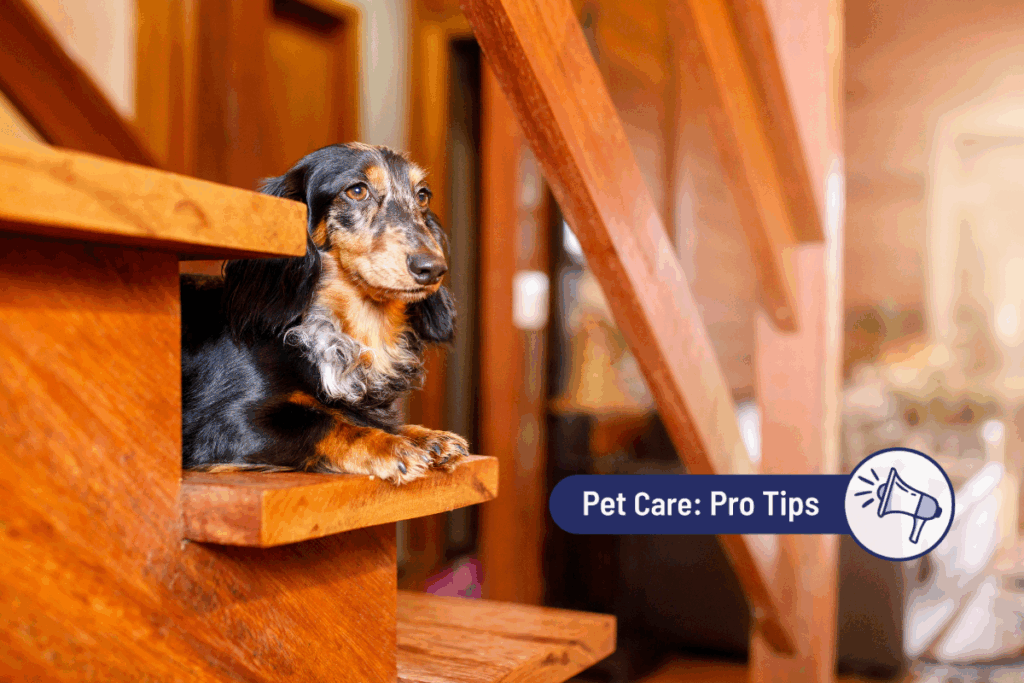
Additionally, certain breeds and small puppies can struggle with stairs simply due to their size and build. Short-legged dogs like Dachshunds or Corgis may be more avoidant of steeper flights and typically have to expend more energy to climb stairs. They might need to take stairs more slowly because each step is proportionally larger to their body. For them, even one step can feel like a leap.
Another key thing to consider is the stairs themselves, like the steepness, step size, and material, all of which can affect how safe they feel going up or down. In particular, hardwood and tile can feel slippery under a dog’s paws. Adding grip or stair treads will improve their traction and provide a safer experience overall.
Past encounters with stairs can also play a role in your dog’s fear. Even without injury, a couple of slips on hardwood steps could leave a lasting impression, making them hesitant to try again.
Whatever the cause, the goal is to build your dog’s confidence gradually so they feel secure and in control every time they approach the stairs.
Why Is My Dog Suddenly Afraid of the Stairs?
When a dog that’s always used stairs without issue suddenly refuses, it’s often tied to a recent change in their environment or their own body.
Consider whether anything has changed around the home; even subtle environmental changes can affect a dog’s behavior. It could be something simple, like rearranged furniture, or something more significant, like a new baby in the home.
Other times, the change comes from them. Joint discomfort, injury, vision changes, or age-related stiffness can make stairs feel more daunting than before. A mild strain or sore paw can deter your dog from normal activities. If your dog’s reluctance appears suddenly, check for both environmental and physical changes. If you suspect discomfort or a medical issue, schedule a vet visit first to ensure it’s safe for them to use the stairs. Once cleared, reintroduce the stairs slowly, pair each step with positive reinforcement, and keep the experience calm and low-pressure.
Strategies for Helping Your Dog with Fear
The key to helping a dog overcome a fear of stairs is patience. Progress comes from consistent, positive experiences rather than rushing the process. Start with just a few low steps, such as those on a porch, deck, or sturdy training platform. Introducing simple agility exercises, like walking over low platforms, weaving between cones, or stepping through a ladder laid flat on the ground can improve coordination and body awareness.
Keep the space calm and distraction-free, letting your dog investigate at their own pace. Reward small signs of curiosity, like a sniff or a paw on the first step, with praise and a high-value snack, something extra special that will motivate them to keep trying.
As you work with your dog, pay close attention to their body language. Watch for cutoff signals, such as pulling their paw away, turning their head, or backing up. These signs mean your dog is feeling uncertain and needs more time before moving forward.
If this happens, you can use partial touches to gently introduce the movement. For example, reach toward their paw without making contact, then pull back and give a reward. Gradually work up to touching the paw and placing it on the step. This slow, respectful approach helps build trust while keeping the experience positive.
When your dog is ready, encourage them to take one step at a time and celebrate each success before moving on. If traction is a concern, use non-slip treads or a carpet runner to improve stability. Gradually increase the number of steps in short, regular sessions, and over time, your dog will gain the confidence to handle longer flights.
Helping Your Dog Stay Calm While Building Stair Confidence
Helping your dog feel comfortable on the stairs isn’t just about physical practice. It’s also about supporting their emotional state. A relaxed dog will learn faster and be more willing to try. Before training sessions, choose a quiet time of day and limit background noise or distractions. If other pets or family members create excitement, give your dog some space to focus without extra commotion.
Keep your own body language calm and reassuring. Dogs are quick to pick up on tension, so speaking in a steady, upbeat tone can help them feel secure. Break training into short sessions, and always end on a positive note, even if progress is small. Offering a few minutes of a favorite activity after a stair session, like a gentle game or belly rub, can help your dog associate the training with good experiences.
Some pet parents also explore supplements that may help promote relaxation, such as CBD for dogs, as part of a broader approach to supporting calm behavior during training. Pair this with other calming elements, like a familiar blanket or practicing after a walk when your dog is naturally more relaxed, to create the right mindset for learning.
By combining stair practice with a low-stress environment, positive reinforcement, and supportive tools, you set the stage for steady, confident progress.
Special Considerations for Puppies and Senior Dogs
Puppies and senior dogs may need extra care when it comes to stairs.
Puppies are still learning how to coordinate their growing bodies, so stairs can be tricky. Start with short flights and keep a close eye to prevent tumbles. Carrying them when they’re very small is a safe option but be sure to give them opportunities to practice safely as they grow.
Senior dogs might find stairs harder due to changes in mobility or strength. In these cases, slow, supportive practice is key. Using a harness with a handle can give them extra stability, and adding non-slip surfaces can make a big difference. If you notice ongoing hesitation, stiffness, or changes in their movement, consult your veterinarian for guidance.
Helping a Dog That’s Afraid of Going Down Stairs vs. Up Stairs
For some dogs, the real challenge is heading down the stairs. Moving downward requires more balance and control, and it can be unsettling if a dog struggles with depth perception, discomfort, or feels unsure about where each step begins and ends. The steeper the staircase, the more intimidating it can appear from the top.
In these situations, start at the bottom and practice on just a few low steps going up, then turn around and guide them slowly down. Standing beside them for support, or using a harness with a handle, can give extra stability until they feel secure enough to attempt it alone.
Climbing stairs can be a different kind of challenge. The incline can feel like a big effort, especially if the steps are tall or the surface is slippery. Encouragement from the base of the stairs, paired with rewards for each step forward, can help motivate them to keep going. Some dogs benefit from practicing on ramps or small platforms first, then moving to a short staircase before tackling longer flights.
By recognizing whether your dog struggles more when ascending or descending, you can tailor your approach and set them up for success in a way that feels safe and achievable.
Common Mistakes to Avoid When Helping a Dog with Stairs
Some well-meaning approaches can make a dog’s fear worse. Forcing them onto the stairs, pulling them with a leash, or carrying them abruptly can increase stress and set back progress. Skipping steps in training or expecting them to manage a full staircase too soon can also overwhelm them.
Avoid long, exhausting sessions that leave your dog frustrated. Instead, aim for short, encouraging experiences that end on a positive note. Stay calm and patient — frustration or raised voices can make the stairs feel even more intimidating.
Helping Your Dog Take the Leap
Helping your dog get over their fear of stairs takes patience, encouragement, and a lot of positive experiences. Celebrate progress, no matter how small. Even if your dog never becomes a stair-climbing champion, building their confidence and comfort is what matters most.
And remember, you’re not just teaching them to handle stairs; you’re showing them that they can trust you to guide them through new and challenging situations. That trust will carry over into all kinds of wonderful moments in your life together.