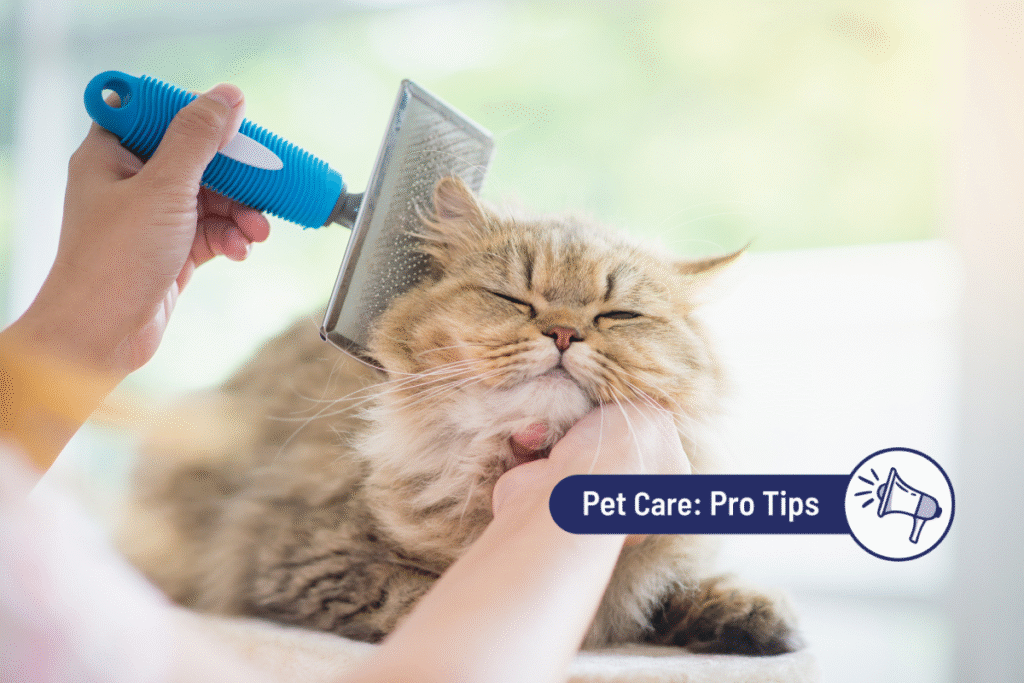
While most felines are fastidious self-cleaners, there are many benefits to supporting your kitty’s grooming effort for optimal coat, eyes, ear, skin, and teeth health. Grooming your cat at home can be done with a few different methods, depending on the breed of your cat and coat type. If your cat gets uneasy during brushing or baths, you’re not alone. A few simple habits can make grooming easier for both of you.
Table of Contents:
Why Groom?
Cats clean themselves, right? True, but grooming support — or even just creating a routine of checking your cat’s skin, eyes, ears, and claws—can help you stay on top of their health. This is particularly important if your cat is a long-haired breed or is simply getting older and less able to groom themselves.
Bathing
Cats usually have this covered, but sometimes stinky things happen! You can help prevent bath time from becoming a bloodbath with lots of treats, encouragement, and a few easy steps:
- Fill a tub or sink with lukewarm water
- Lay down a rubber mat if possible
- Use a jug to pour water over your kitty, avoiding the head and face
- Work cat shampoo in the direction of the hair, rinse thoroughly
- Wipe their face with a damp washcloth
- Dry shampoo is always an option for water-averse cats!
Brushing
Regular brushing can help remove dirt, grease, and loose hair from your cat’s coat and promote blood circulation for long-term skin health. It can be especially beneficial for long-haired breeds to avoid tangles and reduce shedding. If your cat is resistant to being brushed, start slowly and let them set the pace. Begin with short sessions during calm moments and use gentle strokes in areas they already enjoy being touched, like under the chin or along the back. Pair brushing with something positive, like treats or affection, so it becomes a routine they can learn to tolerate (and maybe even enjoy).
Eyes
Your cat’s eyes are easy to monitor. Wipe away gunk with a damp cotton ball and examine their eyes closely, including under the eyelid. Swelling, cloudy eyes, redness on the lid, discharge, or a visible third eyelid are indications that veterinary attention is needed.
Ears
Check your kitty’s ears regularly, especially if you notice scratching or head shaking. Redness, wax, or bad odors are indications that veterinary attention is needed. For minor issues, a vet-recommended ear cleaner on a cotton ball can wipe away dirt or wax.
Paws
Check paw pads regularly for redness or cracking. Long-haired cats may need paw trimming to avoid irritation. Indoor cats are prone to overgrown nails, so regular trimming may be necessary. For nail trims and paw checks, start by simply getting your cat comfortable with having their paws handled. Gently touch and hold their paws during relaxed moments, then gradually introduce trimming one nail at a time. Try to keep the sessions short and low-stress. Watching for sensitivity, debris, or changes during these quick check-ins can help you stay ahead of potential issues.
Teeth
Monitor dental health by gently pushing back your cat’s lips and checking gums and teeth. Redness and swelling on the gums and broken or browned teeth and bad odors are indications that veterinary attention is needed. When checking your cat’s teeth, start with quick, gentle lifts of the lip during calm moments rather than trying to open their mouth fully. Keeping it brief and positive can help your feline friend become more comfortable with this routine over time.
When to Avoid Grooming at Home
The fact of the matter is, not all cats will tolerate at-home grooming! If these attempts cause your cat distress (or cause you a lot of scratches), consider regular professional grooming services and focus on monitoring your cat’s overall health.
CBD + CBDA can promote a sense of relaxation and calm behavior in cats. A relaxed cat is a happy cat, and one that is more likely to tolerate grooming! Support your pet’s overall health and wellbeing with ElleVet CBD + CBDA Oil, Feline Soft Chews, Soft Gels, or Paste for felines.
Any health or medical information in ElleVet blogs is from a variety of public and reputable sources. This information is intended as an educational resource only and is not a substitute for expert professional care.