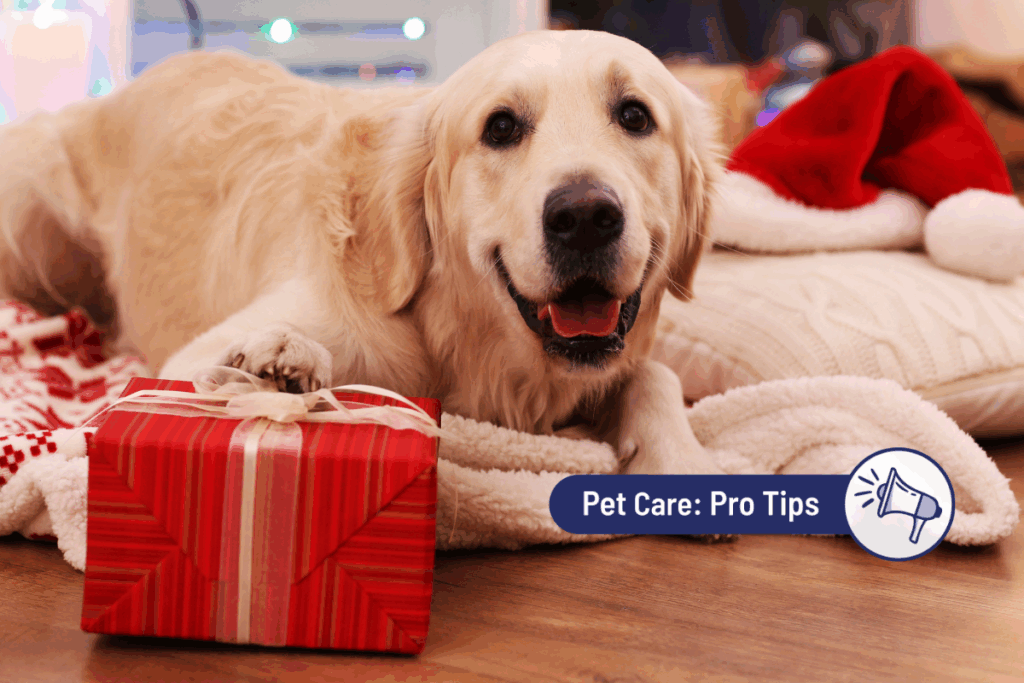
The holidays are full of fun, food, and festivities, but they can also bring new risks for pets. We recently sat with Bob Menardi, DVM, ElleVet’s Senior Director of Learning & Development to seek answers to common questions veterinarians hear from pet parents this time of year. Read on for Dr. Menardi’s tips and insights on keeping your pets safe, comfortable, and calm throughout the holiday season.
Question: Which holiday foods are dangerous for dogs?
Dr. Menardi: The biggest culprits are chocolate, grapes and raisins, xylitol (found in sugar-free treats), onions, garlic, macadamia nuts, and anything containing alcohol. Cooked bones are also dangerous as they can splinter and cause choking or internal injuries. Fatty foods like turkey skin, ham, and gravy can trigger pancreatitis, a painful and potentially serious condition, so keep those off-limits too.
Question: Can my dog have a small bite of holiday dinner or dessert?
Dr. Menardi: A tiny piece of plain, cooked turkey or sweet potato without seasonings is generally safe for most dogs but skip the desserts and heavily seasoned dishes. Many holiday treats contain butter, sugar, spices, or toxic ingredients that can upset your dog’s stomach or worse. When in doubt, stick to dog-safe treats instead—your pup will be just as happy with something made for them!
Question: What should I do if my dog sneaks food from the table or trash?
Dr. Menardi: First, try to figure out what and how much they ate, then call your veterinarian or the Pet Poison Helpline (855-764-7661) right away if it could be toxic. Watch for symptoms like vomiting, diarrhea, lethargy, or unusual behavior over the next 24 hours. The sooner you act, the better the outcome, so don’t wait to see if symptoms develop if you know they ate something dangerous.
Question: Are Christmas trees, ornaments, or tree water harmful to dogs and cats?
Dr. Menardi: Christmas tree water can contain bacteria, fertilizers, or preservatives that may cause stomach upset if your pet drinks it, so cover the base or use a tree skirt. Pine needles can irritate their mouth and stomach or cause punctures if swallowed, and they’re especially tempting to curious cats. Glass ornaments, tinsel, and small decorations pose choking hazards or can cause serious intestinal blockages, so hang fragile items higher up and skip the tinsel if you have cats.
Question: How can I help my pet feel comfortable around guests and noise during holiday parties?
Dr. Menardi: Set up a quiet, comfortable room away from the action where your pet can retreat with their own bed, toys, and water. Make every effort to maintain your pet’s daily feeding and exercise routine. Let guests know to give your pet space and not to open doors where they might escape in the excitement.
For dogs who experience situational stress due to holiday festivities, consider calming chews for dogs, like ElleVet’s CBD + CBDA-rich hemp products, or talk to your vet about other calming options.
Question: What are signs that my dog or cat is stressed or overwhelmed during the holidays?
Dr. Menardi: Dogs may pant excessively, pace, hide, tuck their tail, pin their ears back, or show whale eye (whites of eyes visible). Cats often hide for extended periods, stop eating, over-groom, have flattened ears, or may become unusually aggressive or vocal. Both species might have accidents in the house or exhibit destructive behavior when stressed, so if you notice these signs, give them a break in a calm, quiet space.
Question: Is it better to travel with my pet over the holidays or should I board them?
Dr. Menardi: It really depends on your pet’s personality and the length of your trip – some pets do great with travel while others find it very stressful. Consider factors like your pet’s age, health, stress level, and whether your destination is pet friendly with a calm environment. For stressed pets or long trips with lots of hustle and bustle, a trusted pet sitter at home or a quality boarding facility might be less stressful than dragging them through airports and unfamiliar places.
Question: How can I help my dog or cat if they get stressed during travel, boarding, or staying home with a sitter while we are away?
Dr. Menardi: Bring familiar items like their favorite blanket, bed, or toys that smell like home to provide comfort in new environments. Maintain their regular feeding and exercise schedule as much as possible, since routine helps reduce stress. If your pet is very uncomfortable when traveling, talk to your vet beforehand about calming supplements, and consider doing a trial run with a pet sitter or boarding facility before the actual holiday trip.
Question: What are safe and stimulating holiday gifts or chews I can give my pet?
Dr. Menardi: For dogs, durable rubber toys like Kongs (which you can stuff with treats or peanut butter), bully sticks, or dental chews are great options that keep them occupied safely. Cats love interactive toys like feather wands, puzzle feeders, crinkle balls, and catnip-filled toys that engage their hunting instincts. Just avoid rawhide, cooked bones, toys with small parts that can be chewed off, and anything with strings or ribbons that could cause intestinal blockages if swallowed.
Question: Which common holiday plants, like poinsettias, mistletoe, and holly, are toxic to pets and what should I do if my dog or cat eats them?
Dr. Menardi: Mistletoe and holly berries are quite toxic and can cause serious symptoms like vomiting, diarrhea, difficulty breathing, and even heart problems. Poinsettias are actually less dangerous than their reputation suggests—they typically only cause mild stomach upset and mouth irritation. If your pet eats any of these plants, call your vet or Pet Poison Helpline immediately (855-764-7661), and bring a sample or photo of the plant so they know exactly what was ingested.
Question: How can I safely manage holiday decorations like tinsel, glass ornaments, and small, breakable items?
Dr. Menardi: Place fragile ornaments and small decorations on higher branches where pets can’t reach them, and consider using shatterproof ornaments on lower branches. Skip tinsel altogether if you have cats, as they’re drawn to the shiny, stringy material, and if swallowed it can cause life-threatening intestinal blockages. If your holiday celebrations include a Christmas tree, be sure to secure your tree to the wall or ceiling to prevent it from toppling if a curious pet decides to climb or play with it and pick up any fallen decorations immediately.
Question: What are the dangers of a dog chewing on electrical cords from lights or other decorations?
Dr. Menardi: Chewing through electrical cords can cause severe burns to your dog’s mouth and tongue, and in serious cases can lead to fluid buildup in the lungs or even electrocution. Run cords behind furniture or use cord covers to make them less accessible, and unplug decorative lights when you’re not home to supervise. If your dog does chew a cord, check their mouth for burns, watch for difficulty breathing or eating, and contact your vet immediately even if they seem fine—some symptoms can develop hours later.
The Bottom Line
The holidays are a fun and exciting time for families, and that (naturally) includes our pets. But between new foods, decorations, and visitors coming and going, the season can be overwhelming for them. The good news is that with awareness and preparation, you can help keep your pets safe, comfortable, and part of the celebration.
Meet the Veterinarian

Robert Menardi, DVM is the Senior Director of Learning & Development with ElleVet Sciences. He leads the company’s comprehensive veterinary technical education and outreach programs and serves as the subject matter expert for members of the veterinary profession. Dr. Menardi has worked in the veterinary medical cannabinoid arena since 2019, with key roles in education, commercialization, and research and development.
Dr. Menardi worked in private clinical practice for 12 years after graduating from Colorado State University in 1990 with his DVM degree and has held several leadership roles in the animal health industry prior to joining ElleVet.
Any health or medical information in ElleVet blogs is from a variety of public and reputable sources. This information is intended as an educational resource only and is not a substitute for expert professional care.